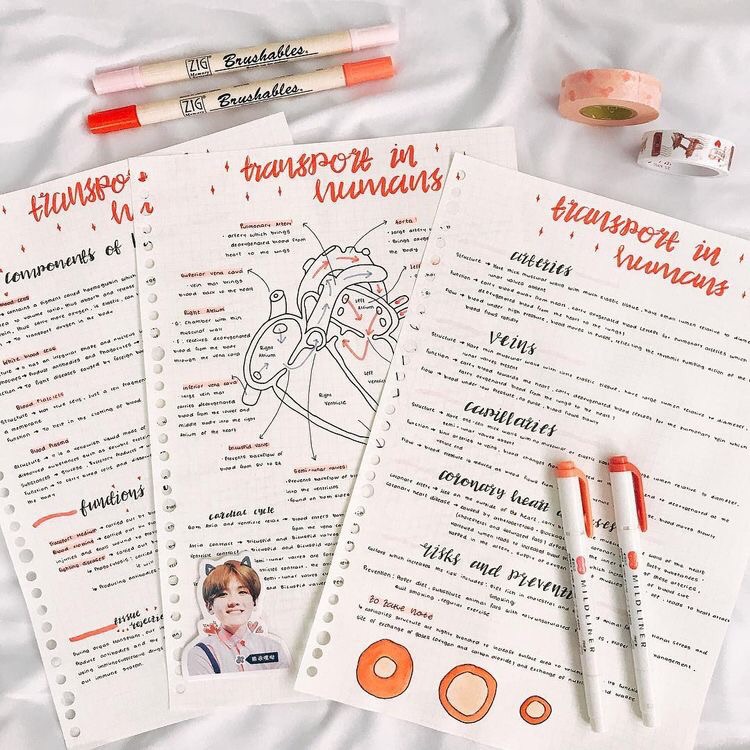
“What is the powerhouse of the cell?”
*flip*
“Mitochondria”
Have you ever used flash cards as a study tool? If you have, you’ve practiced a form of spaced repetition.
Spaced repetition is a form of learning that uses flashcards, in which the user studies newer, more difficult cards more frequently as older, less difficult cards are less frequently shown.
This method of learning builds upon the spacing effect. Hermann Ebbinghaus, a German psychologist that studied memory, is known for his work on the forgetting curve and the spacing effect. He found that learning was most efficient in spaced-out sessions versus a single “cramming” session (1). Information is better encoded into long-term memory when studied in intervals. When coupling the spacing effect with spaced repetition, new studies have shown that the rate of learning is enhanced.
A study in 2016 questioned whether American students spend enough time in school. Every couple years, international assessments release rankings and standings of student performance in different subjects per country, and concerns have arises as to why American students fall behind their peers in other countries. “Although the research surrounding the benefits of spaced practice for more complex kinds of learning is not as extensive as that for memory, some evidence indicates that spacing can enhance meaningful learning that generalizes to new situations” says Dr. Sean Kang of Dartmouth University (2).

Enter, Anki.
Anki is a powerful flash cards program that integrates spaced repetition into their algorithm to enhance learning and memorization. Popular among graduate, medical, and dental students, Anki is a learning tool that allows students to create flashcards and assign a level of difficulty to each card as it is shown. The program then “shuffles” the card and shows newer, more difficult cards more frequently and older, less difficult cards are shown less frequently. This program decreases the amount of time spent learning a particular subject or language as it cements information for the user. This tool is also content-agnostic and supports images, videos, and audio for endless creation of cards and topics. There are also add-ons for the program.
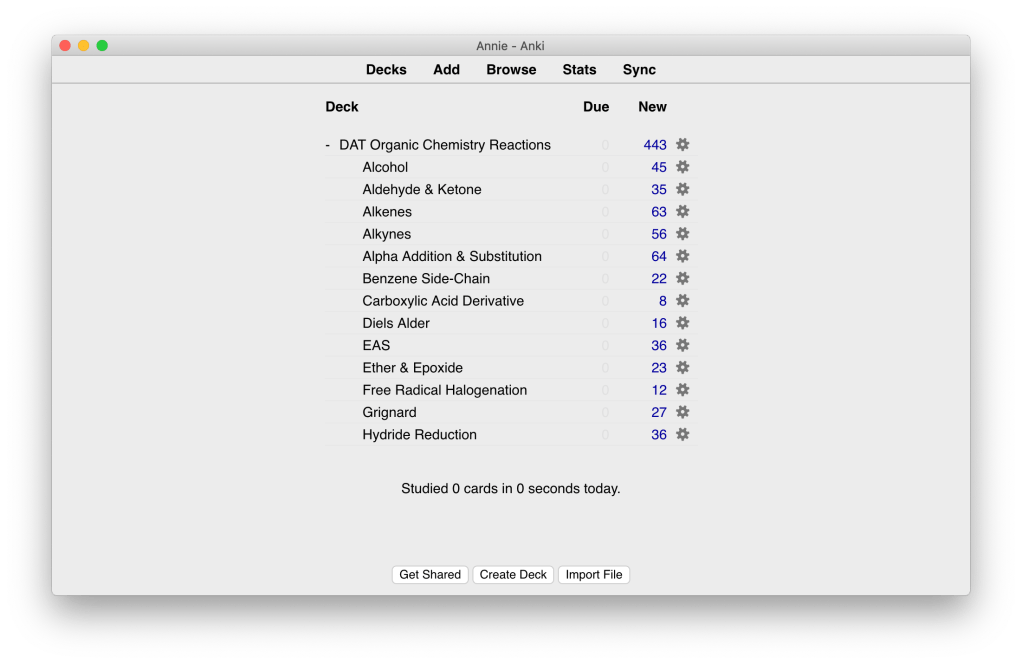


On Anki’s website, the creators example multiple uses for Anki flashcards, such as learning a language, studying for medical and law exams, memorizing names and faces, mastering long poems, and even learning guitar chords. Although Anki is a great studying tool, it is not a replacement for learning. Note that spaced repetition is a method of studying. Anki is a great way of cementing concepts and topics after learning and understanding the material at hand.
I spent my whole summer of 2019 inside and studying for the Dental Admissions Test (DAT). Aside from bootcamp programs, Anki was the most useful tool in helping me remember trivial facts or chemical reactions. Instead of attempting to actively recall information, Anki’s algorithm allowed me to review different topics in intervals and cut my studying time. As the website states and many students have commented, “Anki is a Anki is a program which makes remembering things easy. Because it’s a lot more efficient than traditional study methods, you can either greatly decrease your time spent studying, or greatly increase the amount you learn.”
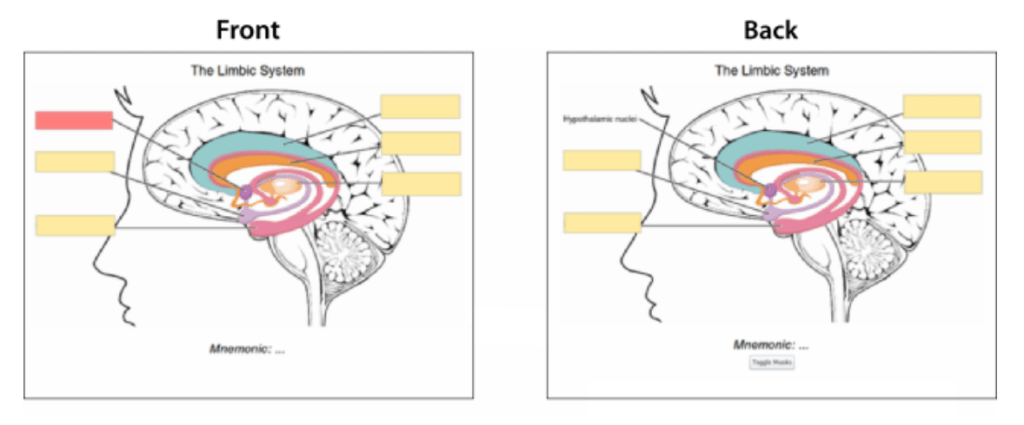
One particularly important add-on that many medical and dental students use is the Image Occlusion add-on. Instead of spending an hour learning what proteins are involved in the Krebs Cycle, I was able to add an image to Anki, use this add-on to cover up the names/steps in the cycle, and then cycle through the image by quizzing myself and uncovering the boxes masking the names/steps. This tool is especially helpful for students who are visual learners and use diagrams in their notes and studying.
Although there are many great flashcard tools and spaced repetition programs out there, Anki is awesome in the fact that your flashcards are automatically synced and saved to your account, can be used offline, and can be used across multiple/different devices. This tool has revolutionized the way I take notes (more in a post later on) and has increased the amount of information and time of retaining that information. If you’re an avid flash-carder, I recommend trying out Anki!
*This blog post was not sponsored by Anki. I’m just a major Anki fan. 🙂
References:
- The Editors of Encyclopaedia Britannica. (2020, February 22). Hermann Ebbinghaus. Retrieved March 14, 2020, from https://www.britannica.com/biography/Hermann-Ebbinghaus
- Kang, S. H. (2016). Spaced Repetition Promotes Efficient and Effective Learning. Policy Insights from the Behavioral and Brain Sciences, 3(1), 12-19. DOI: 10.1177/2372732215624708. https://www.dartmouth.edu/~cogedlab/pubs/Kang%282016%2CPIBBS%29.pdf
 Study Tea